
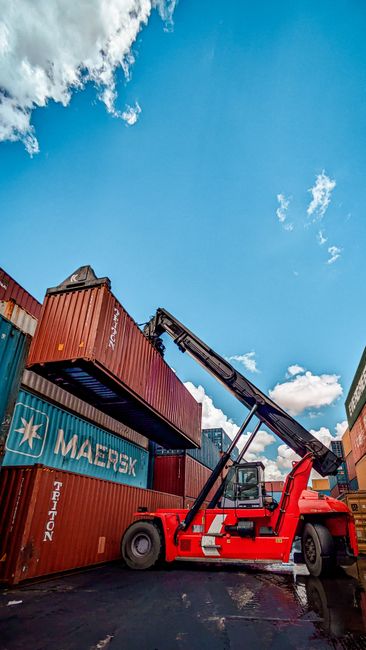
Introduction
Shipping aerial lifts internationally is a complex process that involves far more than just loading a scissor lift onto a cargo ship. Whether you’re a rental company expanding into new markets, a contractor importing equipment for a major project, or a dealer managing cross-border logistics, understanding the true cost structure is essential for accurate budgeting and profitable operations.
In 2026, global supply chains have largely stabilized post-pandemic, but new factors have emerged: rising fuel costs, stricter emissions regulations affecting transport modes, and shifting trade policies between major equipment manufacturing hubs (China, Germany, USA) and import markets across Southeast Asia, the Middle East, and Africa.
This guide breaks down every cost component you need to consider when shipping aerial work platforms internationally.
Key Cost Components
1. Freight Charges (Ocean vs Air vs Land)
Ocean freight remains the most economical option for shipping aerial lifts. For a standard 12-meter scissor lift, ocean freight from Shanghai to Los Angeles typically ranges $1,800–$3,200 depending on container type and seasonal demand. For rough terrain boom lifts requiring flat-rack containers, costs increase to $4,500–$7,000 per unit.
Air freight is rarely economical for heavy equipment but may be justified for urgent, high-value components or compact push-around lifts. Expect $8–$12 per kg, making a 3,000 kg lift cost $24,000–$36,000 to air freight.
2. Import Duties and Taxes
Import duties vary dramatically by country and any applicable free trade agreements. Key examples for 2026:
- USA: 2.5% duty on most aerial lifts under HTSUS 8427.10, plus 10% Section 301 tariffs on Chinese-origin equipment
- EU: 0–4.5% depending on type, with CE marking verification fees (€800–€2,500)
- Southeast Asia (Thailand, Vietnam, Indonesia): 5–15% import duty, often with reduced rates for ASEAN-origin equipment
- Middle East (UAE, Saudi Arabia): 5% standard duty, plus 5% VAT in UAE
- Africa (Nigeria, Kenya, South Africa): 10–25% duty, often with additional levies
3. Insurance
Marine cargo insurance typically costs 0.3–0.8% of the equipment value. For a $45,000 Sinoboom scissor lift, budget $135–$360 for comprehensive coverage including theft, damage, and total loss.
4. Port Handling and Documentation
Terminal handling charges (THC), customs broker fees, and documentation costs add $400–$1,200 per shipment. This includes Bill of Lading, Certificate of Origin, and any required conformity certificates (CE, ANSI, OSHA compliance documentation).
Packaging and Preparation Costs
Proper packaging is critical to prevent damage during transit. Standard preparation includes:
- Anti-corrosion coating and wrapping (especially for sea transport)
- Custom wooden crating or steel framing for boom lifts ($300–$800 per unit)
- Disassembly of protruding components (baskets, outriggers) to reduce shipping volume
- Moisture absorbers and rust inhibitors for ocean shipments
Choosing the Right Shipping Method
For most aerial lift shipments, 40-foot flat-rack containers are the standard for boom lifts, while scissor lifts can often fit in standard 40-foot containers (2–3 units per container depending on size).
Roll-on/Roll-off (RoRo) shipping is an alternative for self-propelled equipment, typically costing 20–30% less than containerized shipping, but with higher risk of weather damage and theft.
Real-World Cost Example: Shanghai to Lagos
Let’s break down a real shipment for a fleet of 5 units (3× 12m scissor lifts + 2× 18m telescopic boom lifts):
| Cost Item | Cost (USD) |
|---|---|
| Ocean freight (flat-rack + containers) | $18,500 |
| Import duty (Nigeria 15%) | $33,750 |
| VAT (7.5%) | $16,875 |
| Insurance (0.5%) | $1,125 |
| Port handling + documentation | $2,400 |
| Inland transport (port to site) | $3,200 |
| Total | $75,850 |
Note: This equals approximately $15,170 per unit — nearly 50% above FOB cost.
Cost Reduction Strategies
- Consolidate shipments: Combining multiple units in one container or flat-rack reduces per-unit freight costs by 20–35%.
- Plan for off-peak seasons: Shipping rates from China spike before Chinese New Year (Jan–Feb) and peak construction season (Mar–May). Shipping in June–August can save 15–25%.
- Work with experienced freight forwarders: Specialized equipment forwarders can navigate complex port regulations and reduce delays that cost $150–$500 per day in demurrage fees.
- Verify equipment origin: Equipment manufactured in ASEAN countries may qualify for reduced or zero import duties under various free trade agreements.
- Consider regional distribution hubs: Importing to a regional hub (e.g., Dubai for Middle East, Singapore for SE Asia) and then re-exporting can sometimes reduce overall duties.
Hidden Costs to Watch For
- Demurrage and detention: $75–$300 per day if containers aren’t cleared and returned on time
- Currency fluctuation: Lock in exchange rates when possible, especially for large shipments
- Pre-shipment inspection: Some countries (e.g., Kenya, Nigeria) require SGS or similar inspection ($500–$1,500)
- Modifications for local standards: Adding region-specific safety decals, gauges, or emergency stops ($200–$800 per unit)
FAQ
How long does international shipping take?
Transit times vary: Shanghai to US West Coast (14–18 days), Shanghai to Northern Europe (25–30 days), Shanghai to Lagos (28–35 days). Add 5–10 days for customs clearance and port handling.
Can I ship used aerial lifts internationally?
Yes, but many countries require proof of safety inspection, remaining useful life documentation, and sometimes environmental compliance certificates. Used equipment may also face higher duties in some jurisdictions.
Do I need special insurance for shipping aerial lifts?
Standard marine cargo insurance is essential. Ensure it covers “all risks” including theft, saltwater damage, and total loss. Some insurers offer specialized heavy equipment coverage with lower deductibles.
What documentation is required for customs clearance?
Essential documents include: Commercial Invoice, Packing List, Bill of Lading, Certificate of Origin, Certificate of Conformity (CE/ANSI), and sometimes import permits. Missing documents can cause costly delays.
Conclusion
Shipping aerial lifts internationally in 2026 requires careful planning and a thorough understanding of all cost components. While freight charges are the most visible expense, duties, taxes, insurance, and hidden port fees can add 40–60% to your total landed cost.
Working with experienced freight forwarders who specialize in heavy equipment, consolidating shipments, and timing your imports strategically can yield significant savings. Most importantly, always budget for contingencies — a 10–15% buffer is prudent given the complexity of international equipment logistics.
At Global Machinery Hub (GMH), we supply Dingli and Sinoboom aerial platforms to customers worldwide. We work with trusted freight forwarders and can provide FOB, CIF, or DDP shipping quotes tailored to your destination. Our equipment meets international safety standards (ANSI, CE, GOST) and is backed by comprehensive after-sales support.
Ready to import aerial lifts? Contact us at marketing2@gmhlift.com or WhatsApp +86 15315316901 for equipment specifications, shipping quotes, and competitive pricing.